
Does YouTube Belong in Hollywood?
The path to funding, over the top film marketing, and the 2029 (YouTube) Oscars.

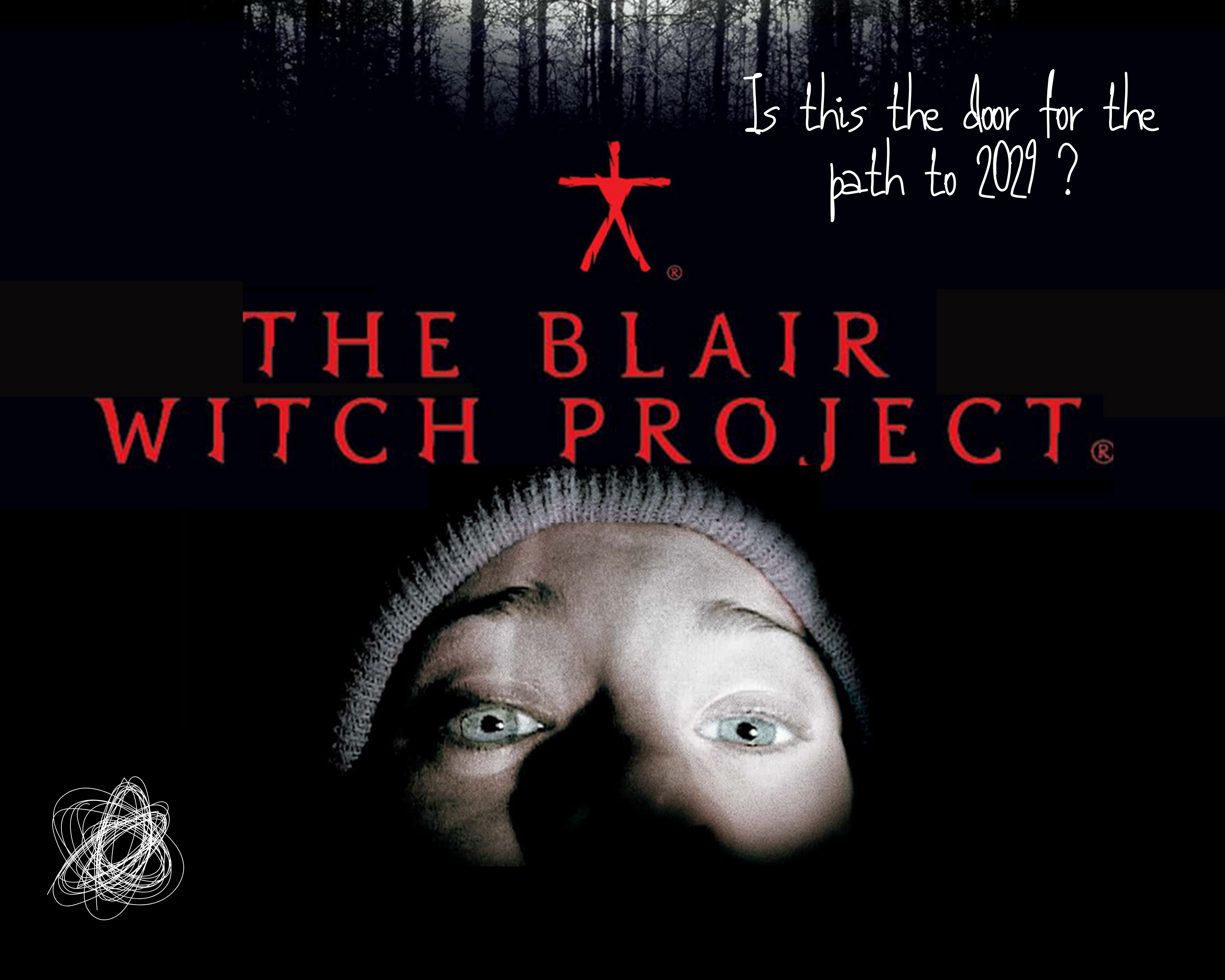
Long before Marty Supreme took over our feeds, The Blair Witch Project (1999) set the blueprint for high-speed, global movie marketing. On a tiny $60,000 budget, directors Daniel Myrick and Eduardo Sánchez delivered the ultimate indie underdog story. The secret weapon? Marketer John Hegeman, who used the “early internet” to build a haunting fake mythology that drew 100,000 views before opening night. That digital buzz propelled the film to a massive $248.6 million global return.
What a year!
Before we begin with this week’s take, we’re reflecting on everything we’ve accomplished together this year.
This year was Callo’s biggest on record—it was the year we proved our bold vision to help independent creators develop and package projects across film, TV, and digital platforms could work. With upcoming projects like 1020 by Julie Goldstone starring Aly Maki with Sherry Cola executive producing or films led by Phiphen Pictures, we’ve built a pipeline and infrastructure outside Hollywood’s traditional backrooms—and proving it works. Together, this community spans 33 countries, thousands of projects added to Callo, and brand new projects that have moved into production.
Thank you to all of you for an incredible year and supporting us as we build a greener path to getting projects made.
Key Trends for 2026
1. Let’s Pay Close Attention to Youtube’s Path to the 2029 Oscars
This year YouTube became the most-watched distributor on TV in America—bigger than Disney+, ESPN, ABC, and Hulu combined. The Oscars’ move to YouTube in 2029 signals: “TV” is now a platform, not a box. This move also signals “prestige distribution” that reaches 2B+ users globally, skews younger, and has deep penetration on living room TVs.
The Oscars will become a year-round YouTube ecosystem—not just the ceremony, but backstage, Governors Ball, Governors Awards, nominees luncheon. It allows them to own key moments, not just reliance on the user’s generated uploads to Youtube. All the access that was never televised and everything that makes projects more investable: experiences, commerce, and IP. A full cultural infrastructure that attracts global capital and full blown engagement.
YouTube changes the prestige film investment math
Year-round Oscars engagement shifts the math: making it easier to justify financing multiple smaller independent projects with breakout potential under $10 million rather than 3-4 large annual big bets of $100 million each. And, if Youtube is part of the equation, could films originated on Youtube be part of the awards in the future? For now they still require a theatre release, but could this be a sign that Youtube will start to cultivate their own prestige fare?
It seems to us that Youtube is following in the footsteps of Netflix in their yearning to impress Hollywood after all. But at what cost?
Brands in the mix
Outside of tech industry wanting to converge with old Hollywood, brands have always wanted to be a part of the film business. But the operational models of each simply have not aligned.
The simplest explanation is that most studio films span 18–36 months before it hits theaters and work outside of performative marketing budgets that operate on a monthly or quarterly basis. Performance marketing such as search, ads, and influencer marketing simply are not on the same calendars as film and television timelines.
Brands measure marketing spend and results within the same month or quarter, but film investments show the payoff after the project is released.
Could a YouTube D2C Independent Film + Television Strategy Work?
Unlike studio productions, micro-budgeted independent projects can move faster—8–12 months from development to release. This aligns with annual brand budget cycles and leverages YouTube year-round in ways studios can't.
This time sensitive incentive unlocks:
Development and/or production funds
Brand underwriting for companion content
“Presented by...” deals tied to cultural themes
Sponsored BTS series and creator collabs
Performance culture metrics investors understand (watch time, appetite, merch, revenue, extended IP potential)
If the audience demand proves to look to Youtube for more prestige fare/premium content and brand money covers production financing AND support marketing—this could potentially solve a substantial portion of indie project’s biggest weakness: finance+distribution+marketing.
2. New Litmus Test for Funding
The discussion happening in every room: Do you belong here?
What indie filmmakers AND digital creators miss is an understanding of how the money flows. Investors, brands, and buyers alike are asking:
“Can we responsibly give this team capital?”
They’re not questioning talent or creativity, they’re questioning financial clarity. Investors now want to hear the big picture of a 360 degree view of the IP upside potential. Can they recoup cost on production financing and marketing efforts before, during and post release, if so, how? Prepare to answer:
Project Playbook (what is the strategy for the project’s production, distribution, and release)
Budget & Financial Plan (first money in?, credible funding sources others will feel confident in investing with)
Attached audiences or cultural traction (who wants this story)
Clear point of view on how this Original concept expands (what are the IP-wide efforts, merch, brand integrations, licensing scenarios )
Experience managing $XX+ projects (collaborators who have worked on this size project more than once, even if you have not)
Platform or distribution fluency (where does your project live, what testing has been done, on which digital platforms)
Risk (what if you have to zig instead of zag, how will you handle it)
Triggers & red flags
Most projects create uncertainty and die before money shows up—not because they’re bad, but because creators can’t translate vision into fundable projects:
No structure (or team governance)
Inability to scope or budget correctly or strategically
Vision is vague
Risk is hidden instead of articulated
Unable to translate project’s meaning into money
Without governance, financial plans, and realistic budgets, projects get scrutinized mercilessly. Investors and buyers will say: “You’re so talented, but I don’t think this one is for us. Keep us updated on your next one.”
Develop a project playbook:
Whether you’re a auteur filmmaker or a digital creator, the requirement is the same: Force hard conversations in development that are agreed to when they’re cheap and reversible—not during packaging and finance conversations, when you only get one chance.
Producers must lead from the front:
Who is the core audience (identified in development, not at the end)
How does that audience consume content and where
Evidence of engagement before production (someone loves this, prove it)
Plus, what will be evaluated first (before story):
Governance/Team Structure: who decides what when things break
Capital position: where all funding comes from and who is managing it
Project Upside/Downside: what IP extension scenarios look like beyond this script
Track record: have you/team managed hundreds of thousands or millions of dollars before
Then comes story, relevance, vision, taste, passion discussions.
3. Moving from Single Titles to Project Worlds
“Investors need exposure to IP-wide upside (scenarios)—sequels, prequels, series, merch, games, live events, creator spinouts. Not single titles.”
Andrea Scarso, IPR.VC (Investor in A24’s Slate)
What fundability looks like in practice
The A24 Project Playbook Thesis: Focus on Auteur Filmmaking for Broad Audiences (for a slate of projects $5M to $100M):
Questions asked:
What must stay true through development, financing, execution?
What’s the governing logic (who runs what)?
What is the project's core thesis, and does each project communicate it?
What audience segment does each project tap into, is it big enough, is it well-rounded?
If the answer breaks—they cut and move on.
Case: Marty Supreme
Timothée Chalamet’s and Josh Safdie’s table tennis biopic opened with:
$875K on six screens
92 sold-out shows
$145,933 per screen
As of December 27th it has since made $13M in 4 days.
Compare: Disney’s Ella McCay made ~$480K across 2,500 screens.
Marty Supreme’s marketing also helped the film pass the litmus test early on:
YouTube-native campaigns
Viral merch (windbreakers reselling for thousands)
Cultural activations (orange blimp, Sphere ads, custom popcorn buckets)
Memeable mantra: “Marty Supreme. Christmas Day. Dream Big.”
Cultural intelligence at scale. Limited seats and Merch sold before the movie dropped, tapping and building upon a fandom.
The Independent Case: Wesley Wang (Digital Creator → Studio Project)
Wesley Wang’s short Nothing, Except Everything sparked a four-studio bidding war. TriStar won. Wang, only 19, got the attention of Darren Aronofsky. Wang will write with Aronofsky producing.
4.4M YouTube views and Grand Jury Prize got attention. But Aronofsky didn’t attach for views—he attached for thematic clarity echoing his own film debut, Pi.
What Wang’s Playbook demonstrated:
Showcased project clarity and strong execution
It quickly answered that there is an audience for this
A clearly defined emotional thesis
Long-term IP upside
Wang’s roadmap captured the interest of an experienced talent led production company that brought the governance power to the table
It’s about fundability—whether you come from film school or YouTube.
Production Companies Are Pushed to Expand
What do Production Companies like Protozoa, Square Peg, Hillman Grad all have in common?
They collaborate with dual fluency across filmmaking and short form work. They evaluate:
Creative vision AND capital constraints
Filmmaker authority AND risk management
Artistic choices AND team structure
Story clarity AND fundability
This is baseline for both independent filmmaking and the creator economy.
The road now and beyond…
Gone are the days where investors just want to be in the business with cool talented creators, these creators and their projects have much higher bar for funding in the premium space:
Before story. Before vision. Before passion.
Investors & Buyers want clarity on your project’s business:
Team governance
Capital position and sources
Cultural relevance
IP Upside / downside exposure
Team’s track record of managing productions and money
Only then does it move to:
Story
Creative Vision
Taste
Thanks for reading Move by Callo! Subscribe, like, and share “Move by Callo”. To learn more about Callo, visit www.wearecallo.com and follow us on instagram @wearecallo. What did you think about this week’s post? Drop a comment, we’d love to hear from you.
— Callo Team
Thank you for this! Would love to read more information about whether it's possible to find/pitch investors if one does not have a manager or agent. Considering so much content is shifting into the hands of creators, do agents and managers still maintain the same power/need?